The Kasım Ağa Mosque in Istanbul—A Byzantine Mystery on the Sixth Hill of Constantinople
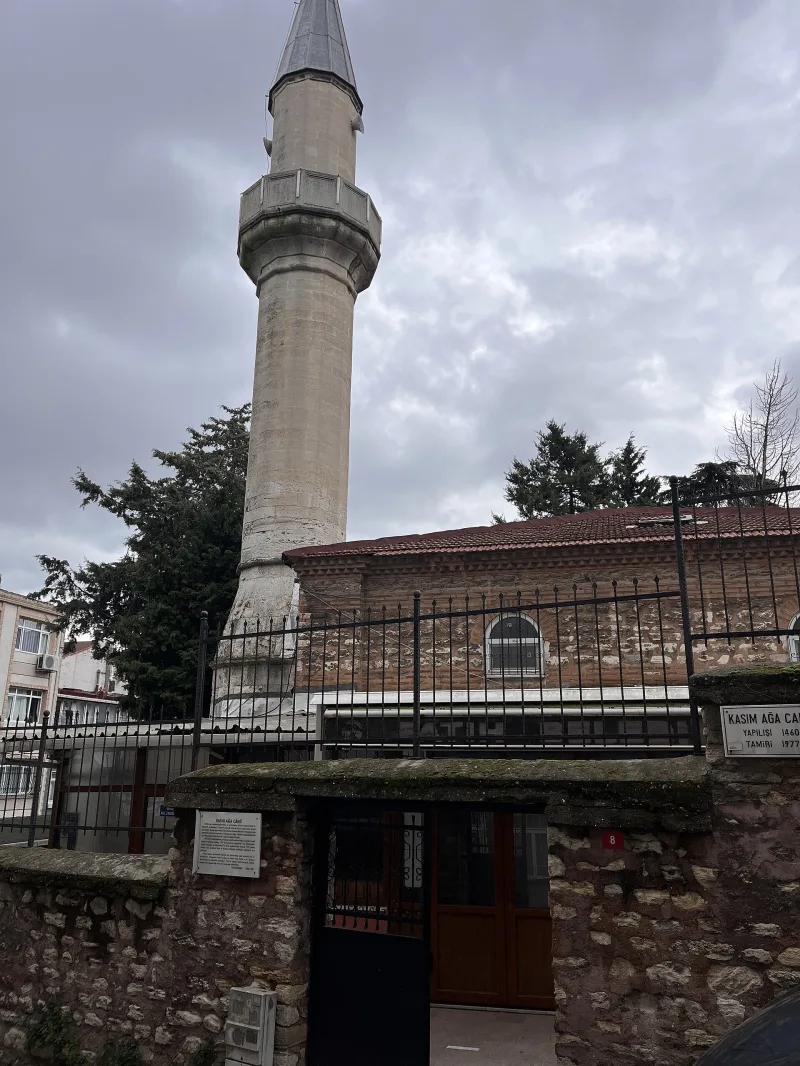
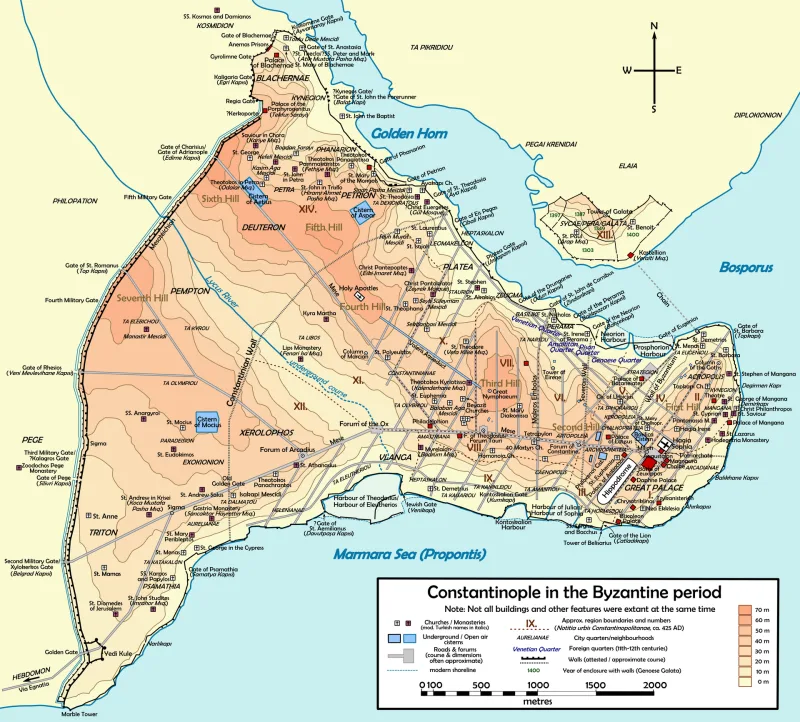
The Kasım Ağa Mosque (Kasımağa Mescidi, also known as Kâsım Bey Mescidi) is a tiny yet remarkable monument in the Fatih district, tucked away in a green courtyard amidst the modern neighborhoods of Salmatomruk. Here, just a hundred meters from the ruins of the Odalar Mosque and a stone’s throw from the famous Kariye, ancient Byzantine walls of brick and stone meet a massive Ottoman minaret. The Kasım Ağa Mosque is a rare case where tourists in Istanbul walk right past it, unaware that they are standing before a building with a history spanning nearly a thousand years: initially, likely, a monastery chapel from the time of the Byzantine emperors, then a small mosque founded in 1506 by the waqf of Kasim Bey bin Abdullah under Sultan Bayezid II. Unremarkable in appearance, it holds within its walls, layer upon layer, the entire history of the sixth hill of Constantinople.
History and Origin of the Kasım Ağa Mosque
The exact date of construction of the original building remains a mystery to this day. Neither the measurements taken during the last restoration nor medieval written sources provide a clear answer as to whom and for what purpose this small structure was dedicated during the Byzantine era. Scholars cautiously suggest that the mosque was part of a large monastic complex, the main church of which was a building known to the Ottomans as the Odalar Mosque. The dedication of this neighboring church is also unknown, and the mystery extends across both sides of the neighborhood.
Archaeologists are certain of only one thing: the complex’s water supply came from the neighboring Ipek cistern—a Byzantine underground reservoir that, during the Ottoman period, was converted into a silk-reeling workshop and nicknamed Ipek Bodrum, “Silk Cellar.” By the time Constantinople fell in 1453, the building was already in ruins: the Byzantine quarter had long since gone about its quiet life, and only the walls remained of the monastery buildings.
After the Ottomans conquered the city, the area around the future mosque was settled primarily by a Christian population. It is all the more surprising that in 1506, during the reign of Sultan Bayezid II, a pious waqf established by Kasim Bey bin Abdullah—possibly the sümbashi, or commander of the Janissary corps, at the time—built a small mosque on the ruins. The waqf endowed it with several shops, plots of land, and the very same Ipek Bodrum cistern, the income from which was intended to support the community.
The mosque’s subsequent fate proved dramatic. The powerful earthquake of 1894, which shook all of Istanbul, destroyed the dome and walls. The final blow came from the Salmatomruk fire on July 2, 1919: after it, only the perimeter walls and the minaret’s base remained. From the mid-20th century, the abandoned building turned into a hej-kondu, an unauthorized residential shack. It was not until the 1970s that a full-scale restoration took place, after which the mosque reopened for prayers and has stood that way to this day.
If one tries to trace this history in a single line, the story turns out to be surprisingly Russian in spirit: a Byzantine monastery chapel—an Ottoman waqf mosque—an abandoned wasteland—an unauthorized structure—a restored monument. Many provincial churches in our country have undergone a similar fate, which is why it resonates particularly deeply with the Russian-speaking traveler: this is not the grand Hagia Sophia, but a quiet “parish” story about how stone outlives people.
Architecture and What to See
The building’s dimensions are modest, and against the backdrop of the grandiose Ottoman structures, it looks almost like a miniature. Nevertheless, it is precisely this compactness that allowed it to survive the centuries: less mass means less damage during earthquakes. Today’s mosque has a square floor plan oriented northeast–southwest. Its Byzantine predecessor was also roughly square: a single-nave space with an atrium on the northeast side and a small projecting room on the east side.
The Byzantine Layer: Brick, Stone, and a Controversial Function
Analysis of the masonry during restoration revealed several construction phases. The foundations and surviving walls are built of alternating rows of brick and hewn stone—a recognizable technique of late Byzantine architecture in Constantinople. Due to its small size, researchers are reluctant to consider the original building a full-fledged church: it is more likely an auxiliary structure of the monastery—a paraklesion, a funeral chapel, or a service building for the monastic community. This debate continues, and every new examination of the brickwork adds arguments to one side or the other.
The Ottoman Transformation of 1506
When Kasim Bey’s waqf took over the ruined building, the craftsmen of 1506 made several important decisions. The atrium on the northeast side was completely dismantled and rebuilt to fit into the logic of the prayer hall. The wall of the mihrab—the very niche that indicates the direction of Mecca—had to be rebuilt from scratch because the Byzantine orientation of the apse did not align with the qibla. At the same time, a massive minaret was added to the northeast side of the building, which is still visible in the neighborhood today; its base survived both the 1894 earthquake and the 1919 fire.
What a traveler will see inside
The modern interior is modest and serene: whitewashed walls, a wooden floor, simple carpets, a mihrab, a minbar, and a women’s balcony. Inside, there are neither the crumbling frescoes of Kariye nor the ornate Iznik tiles found in Rustem Pasha. But if you look closely, you will see patches of old brick in the masonry, variations in surface levels where the new meets the old, and a characteristic “patchwork” combination of materials—a dialogue between two empires that has been ongoing for over five hundred years.
The outer courtyard and the neighborhood context
The mosque stands in a small garden with trees between Koza Sokak and Kasim Odalar Sokak. This green pocket contrasts with the dense development of Salmatmruk: it is surrounded by ordinary residential blocks, and few tourists linger here for more than five minutes. Meanwhile, it is precisely from this courtyard that one can easily take in several eras at once: the ruins of the Odalar Mosque a hundred meters to the southwest, the ancient Aetius cistern, converted into a soccer field, and the mysterious “Bogdan Palace” (Boğdan Saray) on the same terrace.
The Minaret: The Main Ottoman Feature
The minaret, erected in 1506 on the northeast side, deserves special attention. For such a small mosque, it looks almost disproportionately massive, and, in fact, it is this minaret that saves the building from losing its identity: from the street, the Kasym Aga Mosque is recognized first and foremost by this slender pillar. After the fire of 1919, only the base survived; the upper part was restored in the 1970s, modeled after typical provincial-scale Ottoman minarets. This is a rare instance where a 20th-century “reconstruction” faithfully replicates medieval logic without attempting to embellish it.
Interesting Facts and Legends
- The sixth hill of Constantinople, on which the mosque stands, was a outskirts area with monasteries and cisterns during the Byzantine era. Kasim Aga found himself literally surrounded by water: the open cistern of Aetius has now become a local soccer field, while the Ipek Bodrum still lies hidden beneath the neighborhood.
- In historical sources, the name of Kasim Bey bin Abdullah is accompanied by the title of smenbashi—“head of the corps of smen,” in other words, a military commander responsible for a unit of the Janissary army. It is surprising that only this mosque and mentions in waqf archives remain of his earthly career.
- The Ipek Bodrum cistern earned the nickname “Silk Cellar” because, during the Ottoman era, the spacious underground chamber was used as a silk-reeling workshop: artisans spun threads in the cool, dim light of the Byzantine reservoir.
- In the mid-20th century, the building was officially classified as a gehe-kondu—“built overnight”—an unauthorized dwelling. This was a phenomenon typical of Istanbul in the 1950s and 1960s: the ancient mosque was converted into a makeshift shack for a poor family, and its history was forgotten for nearly twenty years.
- The neighboring Odalar Camii, most likely the monastery’s “mother” church, was destroyed even earlier and now lies in ruins—the Kasım Ağa Mosque outlived its “older sister” only thanks to the restoration of the 1970s.
How to get there
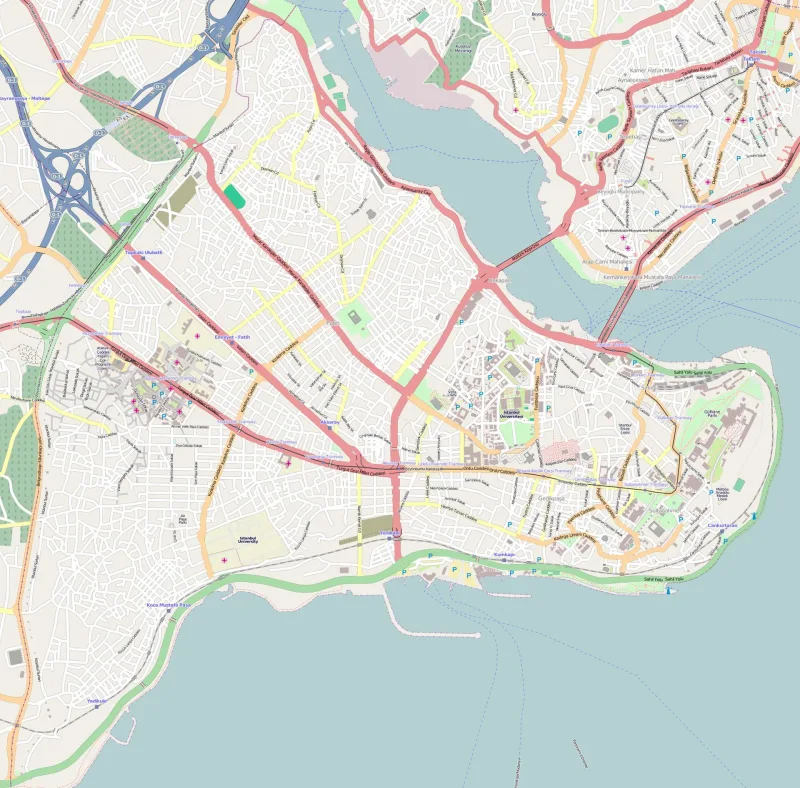
The mosque is located in the Fatih district, in the Salmatomruk neighborhood, not far from the Edirnekapı Gate—the ancient Harisi Gate of the Theodosius Walls. The most convenient route is by the T4 tram, which goes to the Edirnekapı stop. From there, walk down the narrow streets toward the Chora Museum (Kariye)—about 10–12 minutes. Kasım Ağa lies roughly halfway between the Fethiye Mosque (the former Church of the Virgin Mary Pammakarista) and the Chora, and both neighboring sites can easily be combined into a single itinerary.
If you’re coming from Sultanahmet, take the T1 tram to Eminönü, then bus 36CE or 87 to Edirnekapı. From IST Airport, the easiest way is to take the M11 metro to Kağıthane, then the M7 to Mecidiyeköy, and finally a bus. It’s difficult to park a car in this neighborhood: the streets are narrow, and there are few parking spots. Use Google Maps to navigate to “Kasımağa Mescidi” — coordinates 41.029, 28.939, between Koza Sokak and Kasim Odalar Sokak.
Tips for travelers
The best time to visit is late spring (April–May) and early fall (September–October). In summer, the Salmatomruk neighborhood gets scorching hot, with little shade, and in winter, the narrow streets can be slippery after rain. Morning hours are preferable: fewer worshippers, soft light on the old brickwork, and a peaceful atmosphere. Allow about 20–30 minutes for the mosque itself—this is enough time to walk around the courtyard, examine the masonry, and peek inside between prayers.
Remember that this is an active mosque, not a museum. Remove your shoes at the entrance; women need a headscarf and modest clothing (covering shoulders and knees), and men should not enter in shorts. During the five daily prayers, it’s wiser for tourists to wait fifteen to twenty minutes outside. The local community is small and friendly, but they don’t like noise or camera flashes. You can take photos freely outside; inside, keep it quiet and avoid using flash, and ask the imam for permission with a glance.
Combine a visit to Kasım Ağa with nearby sites: in two hours, you can easily walk to Kariye Mosque with its famous mosaics and frescoes, Fethiye Mosque with its late Byzantine parekklesion mosaics, the remains of Odalar Mosque, and climb up to the walls of Theodosius at Edirnekapı. This neighborhood is a veritable laboratory for those who love “layered” Istanbul, where Byzantine brick coexists with Ottoman minarets and modern apartment blocks. Bring water, comfortable shoes for cobblestones, and a notebook—you’ll want to take notes here.
If this isn’t your first time in Istanbul and you’ve already seen Hagia Sophia, the Blue Mosque, and the Süleymaniye Mosque, a tour of the Sixth Hill will serve as a logical “second floor” of your exploration of the city. Kasım Ağa showcases Ottoman architecture not in a grand, ceremonial way, but in an everyday, unpretentious manner—without gilding or crowds—and it is in this everydayness that Istanbul’s true charm lies. A few hours between Edirnekapı and Balat can easily turn into the most memorable day of your trip.
If you’re planning a deep dive, ask a guide to take you along the route of the sixth hill: from the Aetius Cistern through Kasım Ağa and Odalar to Kariye and the walls—this is a rare route that mass tours don’t take. A culinary bonus: after your walk, head down to Balat or Fener for dinner at one of the family-run restaurants overlooking the Golden Horn. The Kasım Ağa Mosque isn’t a highlight in standard guidebooks, but it is precisely these quiet monuments that make Istanbul a city people return to not for the sights, but for the experience.